
Kenyan Sisal Fiber Manufacturer, Supplier & Exporter
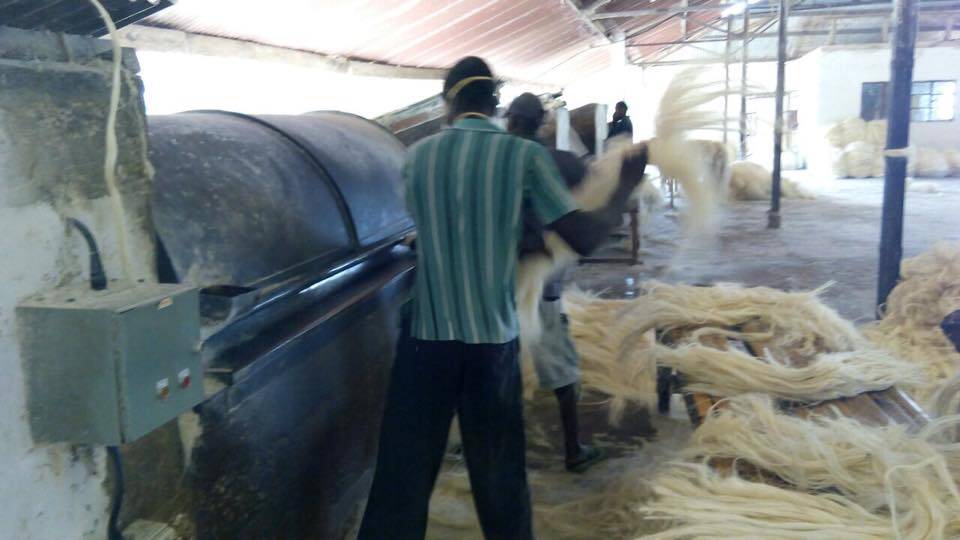
Gloogal Market is a manufacturer, wholesale supplier, exporter and distributor of top-quality UG, SSUG, 3L and TOW grade sisal fiber in Kenya. Every bale is decorticated, washed, sun-dried, brushed, graded and baled to the sisal fibre grade definitions approved by the Kenya Sisal Board, then shipped worldwide from Mombasa with full export documentation.
Our own sisal farm in Mogotio district, Nakuru region — about 300 kilometres from Nairobi — covers 7,000 hectares of fertile dark soil and was established in 2001. At full cultivation the estate carries a production potential of roughly 28,000 tons of fiber a year, at about 4 tons of fiber per hectare, and employs 100 permanent staff plus seasonal workers from neighbouring villages.
Properties of Sisal Fiber
- Exceptionally durable with low maintenance and minimal wear and tear.
- Fully recyclable and biodegradable natural fibre.
- Extracted from the outer leaf skin after removing the inner pulp.
- Available as plaid, herringbone and twill weaves.
- Anti-static — does not attract or trap dust particles.
- Does not absorb moisture or water easily.
- Fine texture takes dyes easily, giving the widest colour range of all natural fibres.
- Good sound and impact absorption; leaves can be treated with natural borax for fire resistance.
Chemical Composition of Sisal Fiber
| Component | Share |
|---|---|
| Cellulose | 65% |
| Hemicelluloses | 12% |
| Lignin | 9.9% |
| Waxes | 2% |
| Total | 100% |
Uses & Applications of Sisal Fiber
- Agricultural twine and baler twine — the traditional leading use, valued for strength and stretch.
- Marine rope, mooring lines, lashing and cargo handling, thanks to saltwater resistance.
- Fibre core of steel wire elevator cables, for lubrication and flexibility.
- Automotive composites blended with fibreglass.
- Carpets, rugs, mats and yarns, alone or blended with wool and acrylic.
- Paper, cloth, footwear, hats, bags, dartboards, gypsum reinforcement and polishing material.
- Spa products, cat scratching posts, lumbar support belts, slippers and disc buffers.
How Sisal Fiber Is Graded
Sisal fibre is fairly coarse and inflexible, and is valued for cordage because of its strength, durability, ability to stretch, affinity for dyestuffs and resistance to deterioration in saltwater. Industry uses three grades:
- Lower grade: Processed by the paper industry for its high cellulose and hemicellulose content.
- Medium grade: Used by the cordage industry for ropes, baler twine and binder twine for marine, agricultural and general industrial use.
- Higher grade: Treated and converted into yarns for the carpet industry.
Quality Limits by Grade
| Grade | Moisture | Impurity |
|---|---|---|
| 3L | 10% – 13% | 2% max |
| UG | 10% – 13% | 4% max |
| SSUG | 10% – 13% | 9% max |
Biology of the Sisal Plant
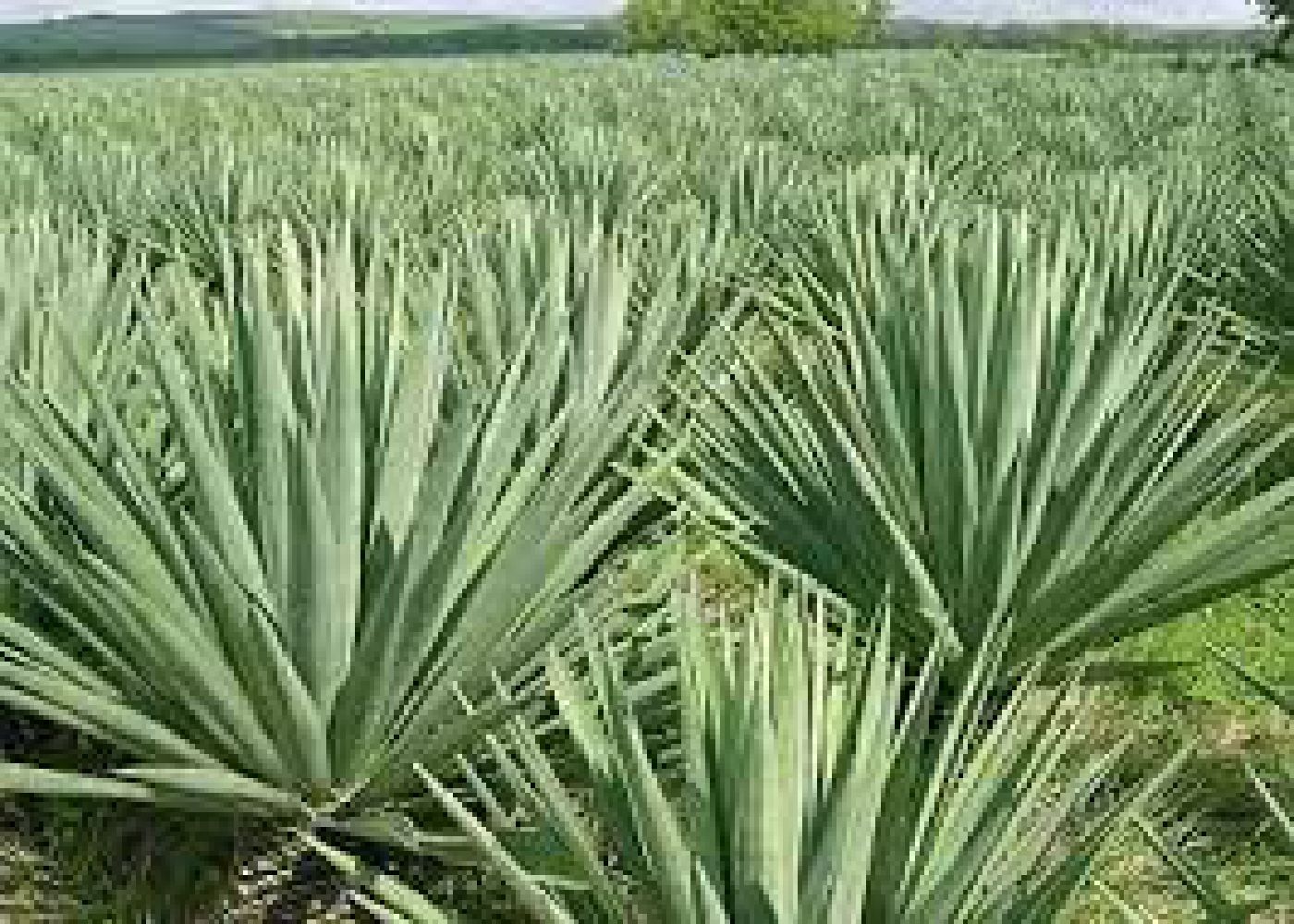
Sisal belongs to the agave family, hardy plants of the arid regions of Central America, Mexico and the south-western United States. Agave sisalana is the commercially grown species today; henequen (A. fourcroydes) is a related fibre agave.
Each plant is a rosette of fleshy, dagger-shaped leaves growing from a central bud, reaching 1 m to 1.5 m long and about 10 cm wide at maturity. Plants grow for 7 to 12 years, then send up a flower stalk 4 to 6 metres tall and die. Sisal is usually sterile, so propagation is by bulbils from the flower stalk or by suckers at the base of the plant.
The Fiber Itself
Sisal fiber is very long — 0.6 m to 1.2 m on average — and creamy white to yellowish. It is coarse, strong and durable, stretches well, insulates well and resists bacterial damage and saltwater. The fiber runs the length of the leaf and is longest and strongest near the leaf surface; the weaker interior fibers are removed during processing.
Cultivation & Harvest
Sisal grows fast and all year round. The first harvest comes when plants are about two years old, and they stay productive for 10 to 12 years, each plant producing 180 to 240 leaves over its lifetime and yielding 1 to 4 tonnes of fiber per hectare.
Harvesting is labour intensive and supports rural communities in areas unsuited to other crops. Cutters work through the plantation every few weeks, taking leaves from each plant and stacking them at the end of the rows for transport to the decortication plant.
Packing & Shipping
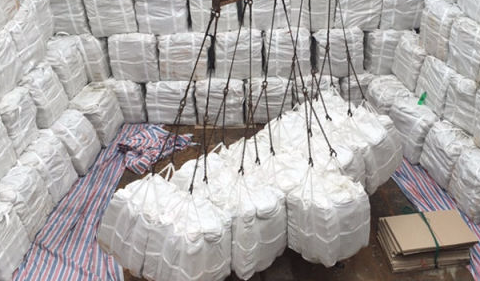
- Hydraulically pressed bales of 100 kg or 250 kg, strapped and labelled by grade.
- About 14 MT per 20ft container and 28 MT per 40ft container, confirmed at booking.
- Loading port: Mombasa, Kenya. Delivery in about 15–21 days after confirmed order.
- Payment: TT / USDT / BTC / ESCROW.
- Short-term and long-term supply contracts accepted.
UG, SSUG and 3L grades are available for export now. Prices are indicative FOB Mombasa, negotiable on volume and contract terms, and confirmed in a formal quotation.
Sisal Fiber (Manufacturer Grades) — Price Range
UG Grade
$1,500 / MT
FOB Mombasa
- Length
- 80 cm (2 ft) upwards
- Color
- Cream White / Natural
- Strength
- ≥ 880 N
- Impurity
- 4% max
- Moisture
- 10% – 13%
- Supply
- 400 Tons monthly
- Port
- Mombasa, Kenya
- Delivery
- 15 – 21 days approx
- Payment
- T/T, USDT, BTC, Escrow
*Price is negotiable based on volume and contract terms.
SSUG Grade
$1,200 / MT
FOB Mombasa
- Length
- 60 cm (2 ft) upwards
- Color
- Cream White / Natural
- Strength
- ≥ 880 N
- Impurity
- 9% max
- Moisture
- 10% – 13%
- Supply
- 80 Tons monthly
- Port
- Mombasa, Kenya
- Delivery
- 15 – 21 days approx
- Payment
- T/T, USDT, BTC, Escrow
*Price is negotiable based on volume and contract terms.
3L Grade
$1,800 / MT
FOB Mombasa
- Length
- 90 cm (3 ft) upwards
- Color
- Whitish / Yellowish, free of defective decortications
- Strength
- ≥ 880 N
- Impurity
- 2% max
- Moisture
- 10% – 13%
- Supply
- 100 Tons monthly
- Port
- Mombasa, Kenya
- Delivery
- 15 – 21 days approx
- Payment
- T/T, USDT, BTC, Escrow
*Price is negotiable based on volume and contract terms.
Importing sisal? Read our Sisal Fiber FAQ for worldwide buyers on grades, prices, packing and shipping.
Frequently Asked Questions
Is sisal a natural fiber?
Is sisal eco friendly?
How is sisal harvested?
What is sisal fiber used for?
Where does sisal fiber come from?
What is the minimum order quantity for Sisal Fiber (Manufacturer Grades)?
What specification do you supply Sisal Fiber (Manufacturer Grades) to?
Which packaging do you offer for Sisal Fiber (Manufacturer Grades)?
Do you quote FOB or CIF prices for Sisal Fiber (Manufacturer Grades)?
How long does shipping take for Sisal Fiber (Manufacturer Grades)?
Can an inspection company check the sisal fiber (manufacturer grades) before shipment?
Which countries do you export Sisal Fiber (Manufacturer Grades) to?
How do I request a quote for Sisal Fiber (Manufacturer Grades)?
What is the current price for Sisal Fiber (Manufacturer Grades)?
Is Sisal Fiber (Manufacturer Grades) available now?
Which fiber grades are available?
How are bales packed for container loading?
Related Sisal Fiber & Industrial Materials we export

Request a Sisal Fiber (Manufacturer Grades) quote
Share quantity, target specification, destination port and incoterm — we reply with a formal offer and, where required, a sample or inspection plan.
Request a Sisal Fiber (Manufacturer Grades) Quote
Send your quantity, target specification, destination port and preferred incoterm — we reply with a formal offer and, where required, a sample or inspection plan.