
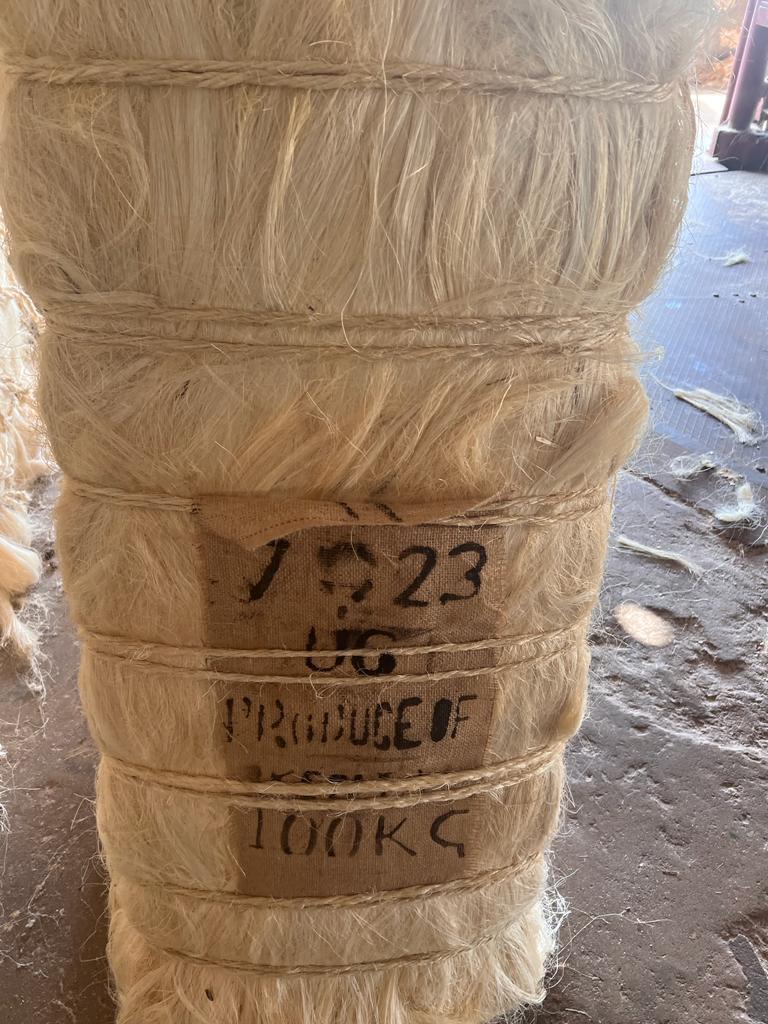
About Sisal Fiber — Wholesale Supply, Manufacturing & Distribution
Gloogal Market has sisal fiber for sale as a manufacturer-backed supplier, exporter and distributor serving importers, processors, wholesalers and industrial buyers worldwide. Sisal Fiber lots are drawn from verified origin partners, sampled before stuffing and accompanied by the full certificate set for the importing country. Both spot containers and repeat monthly sisal fiber programmes are quoted.
Our role as supplier and distributor is practical: we consolidate manufacturer supply, confirm quality against the agreed contract specification, arrange inspection where required, and manage documentation and freight so that sisal fiber arrives on schedule. Quotations for sisal fiber follow your chosen incoterm — FOB, CFR or CIF — and payment terms are settled contractually first.
Sisal Fiber Specifications & Quality Parameters
Sisal Fiber — standard export specification
| Specification | Value |
|---|---|
| Product | Sisal Fiber |
| Grades | 3L, UG, SSUG, UF, UF/W, Tow |
| Moisture | ≤ 12% |
| Fiber length | 60cm – 130cm |
| Colour | Cream to off-white, brushed |
| Packaging | 25 kg, 50 kg, 100 kg, 250 kg bales wrapped in PP or bulk container liners; loaded into 20ft/40ft containers with moisture control below 12%. |
| Strength | High tensile, brushed and combed |
| Trash content | 2–3% max |
| Origin | Confirmed on quotation |
| Minimum order quantity | One 20ft or 40ft container; larger tonnage on contract |
| Incoterms | FOB / CFR / CIF |
| Inspection | SGS, Intertek, Bureau Veritas or buyer-nominated surveyor on request |
| Documentation | Bill of lading, invoice, packing list, certificate of origin, quality certificates as applicable |
| Availability | Available — confirm current tonnage on enquiry |
| Price | $1,200 – $1,800 / MT (indicative FOB — confirmed by formal quotation) |
Below are the specification ranges buyers normally contract for sisal fiber, with final figures agreed per shipment. Off-standard sisal fiber requirements are confirmed with the mill or producer before any offer is issued. Third-party analysis by a recognised inspection company is welcome and easily scheduled at the load port.
- Sisal Fiber contract specification confirmed in writing before loading
- Pre-shipment sampling and laboratory analysis available
- Third-party inspection at load port on request
- Phytosanitary, certificate of origin and quality certificates issued as required
Sisal Fiber Applications & Typical Buyers
Sisal Fiber within our sisal fiber & industrial materials range is bought by processors, manufacturers, feed producers, wholesale distributors and trading houses looking for a dependable sisal fiber supplier. Sisal Fiber is graded for its destination market, whether that is food processing, feed manufacture or industrial input supply. Describe how the sisal fiber will be used and the offer is built around that requirement.
- Rope, twine, cordage and baler twine manufacturing
- Carpet, rug, matting and geotextile production
- Gypsum board reinforcement and construction use
- Pulp, paper and composite manufacturing
Sisal Fiber Quality & Grade
Fiber grading follows established trade classifications for length, colour, strength, trash content and moisture. Bales are brushed, graded and weighed at the plantation, and grade is confirmed at loading with photographs shared before sealing.
Availability for sisal fiber is stated as it stands rather than defaulted to "in stock": the current position is available — confirm current tonnage on enquiry. Treat the sisal fiber range shown as a guide; your formal offer states the firm price for the grade and tonnage you need.
Sisal Fiber Packaging Options
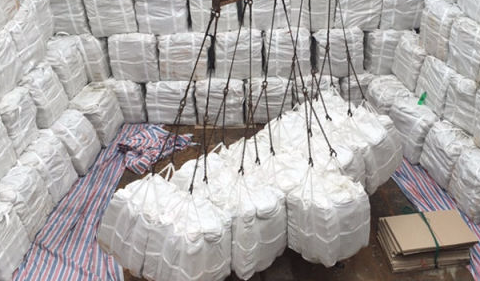
Packaging is selected to protect sisal fiber through ocean transit and handling at destination. Sisal Fiber ships in neutral packaging unless you request private label, which we support on larger orders. We document the stuffing of every sisal fiber container photographically for the buyer's records.
- Compressed bales, hessian or polypropylene wrapped
- Bale weight per contract, strapped with steel or PP bands
- Grade, length and bale number marked on each bale
- Containerised loading with moisture protection
Sisal Fiber Shipping, Delivery & Incoterms
Ocean freight in 20ft or 40ft containers carries sisal fiber to your port, generally within 15 to 21 days. Air shipment is available for sisal fiber samples, with inland trucking for European deliveries. Shipment normally follows 5 – 7 working days after payment confirmation.
Payment for sisal fiber is handled by T/T, USDT, BTC or Escrow, against FOB, CFR or CIF pricing. Bill of lading, invoice, packing list, certificate of origin and quality certificates are emailed and couriered on release.
- FOB, CFR and CIF sisal fiber quotations to any major port
- 20ft and 40ft FCL, plus break-bulk on large tonnage
- Air freight for samples and urgent partial shipments
- Complete export documentation set with every shipment
Sisal Fiber Export Markets We Supply
We ship sisal fiber and related sisal fiber & industrial materials to buyers across USA, Canada, United Kingdom, Europe, China, India, UAE, Turkey and beyond. Each destination sets its own sisal fiber certification and treatment rules, which we check before the contract is finalised.
North America(2)
- Sisal Fiber supplier to Canada
- Sisal Fiber supplier to USA
Europe(3)
- Sisal Fiber supplier to Europe
- Sisal Fiber supplier to Turkey
- Sisal Fiber supplier to United Kingdom
Asia(3)
- Sisal Fiber supplier to China
- Sisal Fiber supplier to India
- Sisal Fiber supplier to Vietnam
Middle East(2)
- Sisal Fiber supplier to Israel
- Sisal Fiber supplier to UAE
Africa(6)
- Sisal Fiber supplier to Burkina Faso
- Sisal Fiber supplier to Cameroon
- Sisal Fiber supplier to Egypt
- Sisal Fiber supplier to Ghana
- Sisal Fiber supplier to Libya
- Sisal Fiber supplier to Nigeria
Oceania(1)
- Sisal Fiber supplier to Australia
Sisal Fiber Quality Assurance & Trust Signals
Gloogal Market has been around for a while and it's has also been a significant players in the exportation of a variety of products in Europe/Asia/American / Middle East and African markets. Gloogal Market serves as an intermediary connecting buyers with verified manufacturers / Exporters and wholesale suppliers. Gloogal Market pride itself with efficiency, reliability and customer satisfaction. We supervise sisal fiber at every stage: origin selection, sampling, grading, packing and loading. Pre-contract sisal fiber samples and third-party inspection are a normal part of our process, not an obstacle.
- Verified sisal fiber producers and vetted export partners
- Pre-shipment sampling and buyer-approved specification
- Third-party inspection accepted and encouraged
- Documented export process with written contracts and proforma invoices
- Responsive sales support by email and WhatsApp across time zones
Why Buy Sisal Fiber From Gloogal Market
North America(1)
- Offices in Las Vegas, USA and Nairobi, Kenya covering buyer and origin sides
Other markets(4)
- Consolidated sisal fiber supply from multiple verified producers, reducing single-source risk
- Logistics handled end to end, including documentation and freight booking
- Transparent specification, packaging and incoterm agreed in writing
- Trial container orders of sisal fiber accepted before volume contracts
Sisal Fiber — Price Range
UG Grade
$1,500 / MT
FOB Mombasa
- Length
- 80 cm (2 ft) upwards
- Color
- Cream White / Natural
- Strength
- ≥ 880 N
- Trash
- About 2%
- Moisture
- 9%
- Supply
- 200 Tons monthly
- Port
- Mombasa, Kenya
- Delivery
- 15 – 21 days approx
- Payment
- T/T, USDT, BTC, Escrow
*Price is negotiable based on volume and contract terms.
SSUG Grade
$1,200 / MT
FOB Mombasa
- Length
- 60 cm (2 ft) upwards
- Color
- Cream White / Natural
- Strength
- ≥ 880 N
- Trash
- About 2%
- Moisture
- 9%
- Supply
- 100 Tons monthly
- Port
- Mombasa, Kenya
- Delivery
- 15 – 21 days approx
- Payment
- T/T, USDT, BTC, Escrow
*Price is negotiable based on volume and contract terms.
3L Grade
$1,800 / MT
FOB Mombasa
- Length
- 90 cm (3 ft) upwards
- Color
- Whitish / Yellowish, free of defective decortications
- Strength
- ≥ 880 N
- Trash
- About 2%
- Moisture
- 9%
- Supply
- 150 Tons monthly
- Port
- Mombasa, Kenya
- Delivery
- 15 – 21 days approx
- Payment
- T/T, USDT, BTC, Escrow
*Price is negotiable based on volume and contract terms.
More About Sisal Fiber
Sisal Fiber Uses
The sisal fibre is traditionally used for rope and twine, and has many other uses, including paper, cloth, footwear, hats, bags, carpets, geotextiles, and dartboards. It is also used as fibre reinforcements for composite fibre-glass, rubber and cement products. Family: Asparagaceae Species: A. sisalana Kingdom: Plantae
Biology of Sisal Fiber
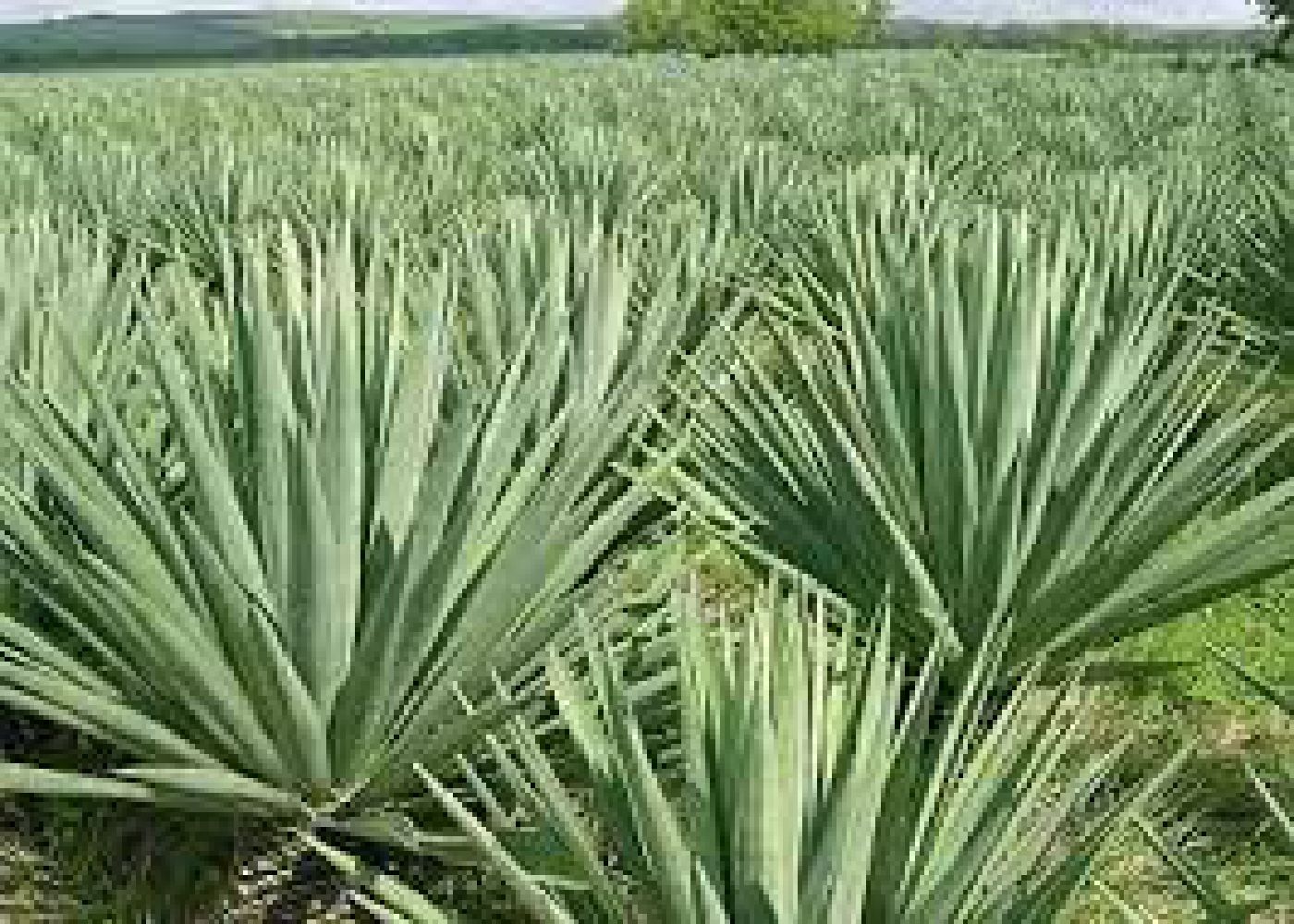
Sisal is a member of the agave family, which are hardy plants of arid regions of Central America, Mexico and South West USA. In the past, several species of Agave were used for fibre production, but now A. sisalana is the commercially grown species. Henequen (A. fourcroydes) is another species of agave that produces fibre, but not of as high quality as A. sisalana. Sisal plants consist of a rosette of fleshy leaves growing from a central bud. The leaves are dagger shaped and when mature 1 m to 1.5 m long and about 10 cm wide. Young plants may have minute spines along the edge of the leaf, but they soon loose them, with only the sharp tip remaining. The leaves are heavy, weighing 500 to 700 grams each, 90% of the weight being moisture. Despite the high water content, the fleshy pulp is firm and the leaves are rigid. The plants grow for 7 to 12 years and then produce a flower stalk 4 to 6 metres tall and die. Although some flowers produce seeds, sisal plants are usually sterile and most propagation is by bulbils produced in the flower stalk, or by suckers that appear at the base of the plant.
Cultivation and Harvest of Sisal
Sisal plants grow fast and all year round. The first harvest can be made when the plants are about two years old and they remain productive for 10 to 12 years. Each plant produces 180 to 240 leaves in a lifetime yielding 1 to 4 tonnes of fibre per hectare. Sisal is a labour intensive crop and it offers employment to rural communities in areas which are often not suitable for other crops. The workers go round the plantation and cut some leaves from each plant every few weeks. They deposit the heavy leaves at the end of rows from where they are taken to a central processing unit. Almost no fertilisers are used in sisal production, they are resilient to disease and most of the weeding is done by hand.
Container Loading
Load compressed sisal fiber bales into 20ft or 40ft containers lined with Kraft paper or silica gel to absorb moisture and prevent mold. A 20ft Full Container Load (FCL) holds roughly 18 to 25 metric tons (MT) depending on fiber density, while a 40ft container can hold up to 28 MT. For safe and compliant container loading of sisal fiber, adhere to the following critical parameters: Container Preparation: Containers must be dry, clean, and entirely free of oil, grease, or chemical residues. A dirty container will contaminate the highly absorbent fiber, risking downgrades or cargo fires through self-heating. Moisture Limits: Moisture content must be strictly controlled (typically remaining below 12%) to prevent rotting, fiber degradation, and mildew during ocean transit. Packaging: Fibers are typically mechanically compressed and packed into 25 kg, 50 kg, 100 kg, 250 kg bales, wrapped in polypropylene (PP) or bulk container liners.
Quality Grading
Sisal fiber is primarily graded by length, color, luster, strength, and impurity levels. The industry divides these natural fibers into specific tiers (such as 3L, UG, and SSUG) to determine their best commercial application, ranging from high-end yarns to agricultural twines.Global Grading StandardsThe physical quality and commercial value of sisal fibers are categorized into specific grades based on stringent traits: Grade 3L (Superior/Long): The highest premium grade. Features an off-white to natural light cream color, a strong luster, and fibers consistently spanning 90 cm to 130 cm in length. It is well-brushed, free of knots, and primarily used in high-end spinning, carpet weaving, and automotive composites. Grade UG (Under Grade / FAQ - Fair Average Quality): The most common commercial grade. Usually cream to yellowish-white in color and at least 60–130 cm long. It contains slightly more moisture (up to 14%) and impurities than 3L but remains strong. It is widely used for industrial ropes, cables, and polishing buffs. Grade SSUG (Selected Standard Under Grade): Slightly lower in quality than UG, these fibers may range from yellowish to darker and more blemished in appearance. They are typically shorter and utilized in lower-tier products like twine, paper pulp, and constructional materials (e.g., gypsum board).Rejects and Tow (Bucha): Lower-end byproducts. These are characterized by a brownish-green hue, shorter lengths (often tangled or knotted), and high dust/trash content. Used largely as a secondary material for padding or non-structural molded items.
Sisal Fibre
Sisal fibre is very long, with an average length of 0.6 to 1.2 m and it is creamy white to yellowish in colour. It is coarse and strong, durable and has the ability to stretch. It also has good insulation properties and it is highly resistant to bacterial damage and to deterioration in saltwater.
The fibre lies along the length of the leaf, being most abundant near the surface of the leaf where it is long and strong. The interior fibres are weaker, and they are usually removed during processing.
FAQ
Is sisal a natural fiber?
Sisal is a natural fibre ( Scientific name Agave sisalana) of Agavaceae (Agave) family yields a stiff fiber traditionally used in making twine and rope. ... Sisal is natural fibre fully biodegradable. It is highly renewable resource of energy.
Is sisal eco friendly?
As a natural fiber, sisal is a renewable and sustainable material. Since sisal is the strongest natural fiber, its rugs last longer than jute, seagrass and other natural fiber options, giving it even more staying power. ... The fibers aren't the only reason a sisal rug is an environmentally friendly choice.
How is sisal harvested?
Our collection of sisal rugs is harvested in superior-grade plantations in Tanzania. The strong sisal fibers are extracted from the plant's long, green leaves, then washed, sun-dried, brushed, graded and bailed on the plantations. ... Every part of the plant is used, making sisal an excellent renewable resource..
What is sisal fiber used for??
It is sometimes referred to as "sisal hemp", because for centuries hemp was a major source for fibre, and other fibre sources were named after it. The sisal fibre is traditionally used for rope and twine, gypsum work and has many other uses, including paper, cloth, footwear, hats, bags, carpets, and dartboards
Where does sisal fiber come from?
Sisal fibres are obtained from Agave Sisalana, a native of Mexico. The hardy plant grows well all year round in hot climate and arid regions which are often unsuitable for other crops. Sisal can be cultivated in most soil types except clay and has low tolerance to very moist and saline soil conditions.
Properties of Sisal Fiber
1: Sisal Fiber is exceptionally durable with a low maintenance with minimal wear and tear.
2: It is Recyclable.
3: Sisal fibers are obtained from the outer leaf skin, removing the inner pulp.
4: It is available as plaid, herringbone and twill.
5: Sisal fibers are Anti static, does not attract or trap dust particles and does not absorb moisture or water easily.
6: The fine texture takes dyes easily and offers the largest range of dyed colours of all natural fibers.
7: It exhibits good sound and impact absorbing properties.
8: Its leaves can be treated with natural borax for fire resistance properties.
Chemical Composition of Sisal Fiber
Cellulose: 65%
Hemicelluloses: 12%
Lignin: 9.9%
Waxes: 2%
Total: 100%
Identification of Sisal Fiber: Name of fiber
Name of fiber Fiber type Flame reaction Color After Burn order
Sisal Cellulose fiber May flair when lit, burn Soft gray ash Burning paper or grass
Uses/Application of Sisal Fiber
From ancient times sisal has been the leading material for agricultural twine because of its strength, durability, ability to stretch, affinity for certain dyestuffs, and resistance to deterioration in saltwater.
1: Sisal is used commonly in the shipping industry for mooring small craft, lashing, and handling cargo.
2: It is also surprisingly used as the fibre core of the steel wire cables of elevators, being used for lubrication and flexibility purposes. Traditionally sisal was the leading material for agricultural twine or baler twine. Although this has now been overtaken by polypropylene.
3: It is used in automobile industry with fiberglass in composite materials.
4: Other products developed from sisal fiber include spa products, cat scratching posts, lumbar support belts, rugs, slippers, cloths and disc buffers.
5: Sisal is used by itself in carpets or in blends with wool and acrylic for a softer hand.
Frequently Asked Questions
Is sisal a natural fiber?
Is sisal eco friendly?
How is sisal harvested?
What is sisal fiber used for?
Where does sisal fiber come from?
What is the minimum order quantity for Sisal Fiber?
What specification do you supply Sisal Fiber to?
Which packaging do you offer for Sisal Fiber?
Do you quote FOB or CIF prices for Sisal Fiber?
How long does shipping take for Sisal Fiber?
Can an inspection company check the sisal fiber before shipment?
Which countries do you export Sisal Fiber to?
How do I request a quote for Sisal Fiber?
What is the current price for Sisal Fiber?
Is Sisal Fiber available now?
Which fiber grades are available?
How are bales packed for container loading?
Sisal Fiber & Industrial Materials: Products We Export
Every commodity below belongs to our sisal fiber & industrial materials range. Follow any link for full specifications, packaging options, loading capacity and current export terms.
 Sisal Fiber (Manufacturer Grades) supplier & exporterSisal Fiber & Industrial Materials export line
 POP White Cement supplier & exporterSisal Fiber & Industrial Materials export line
Other export categories
Request a Sisal Fiber quote
Share quantity, target specification, destination port and incoterm — we reply with a formal offer and, where required, a sample or inspection plan.
Request a Sisal Fiber Quote
Send your quantity, target specification, destination port and preferred incoterm — we reply with a formal offer and, where required, a sample or inspection plan.